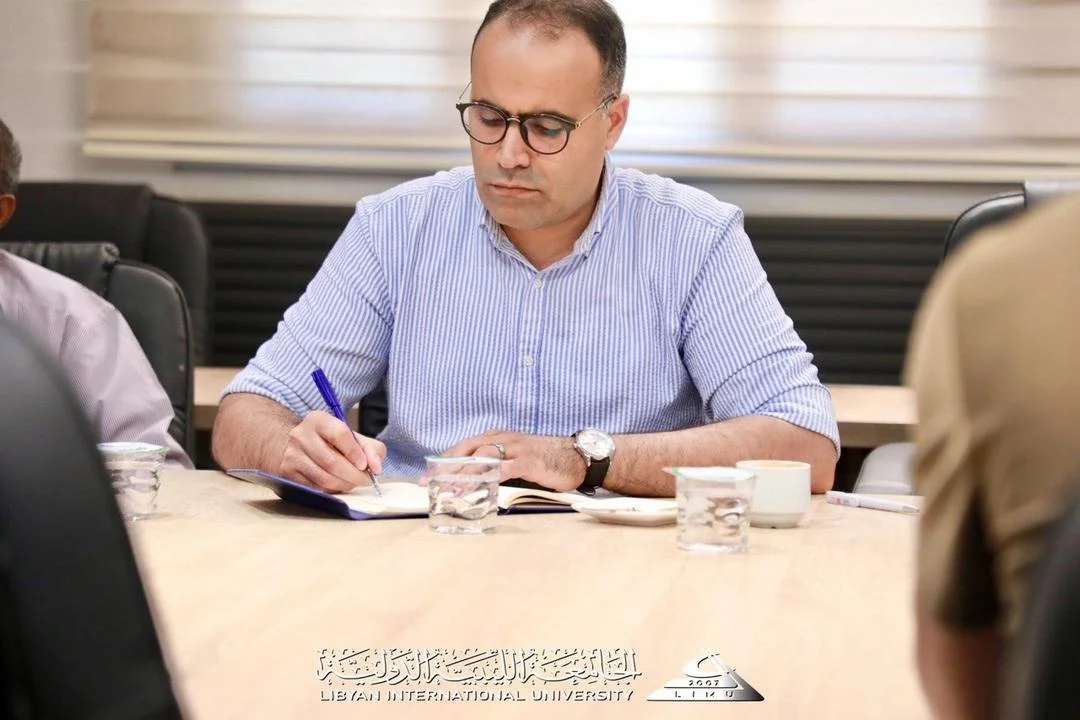
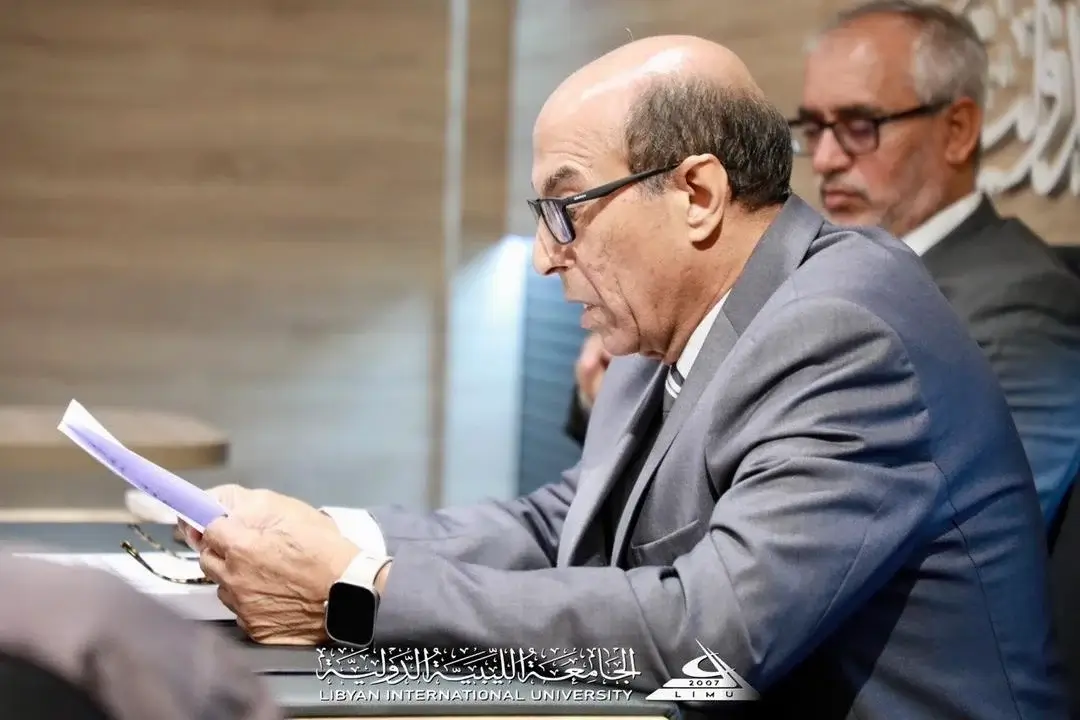
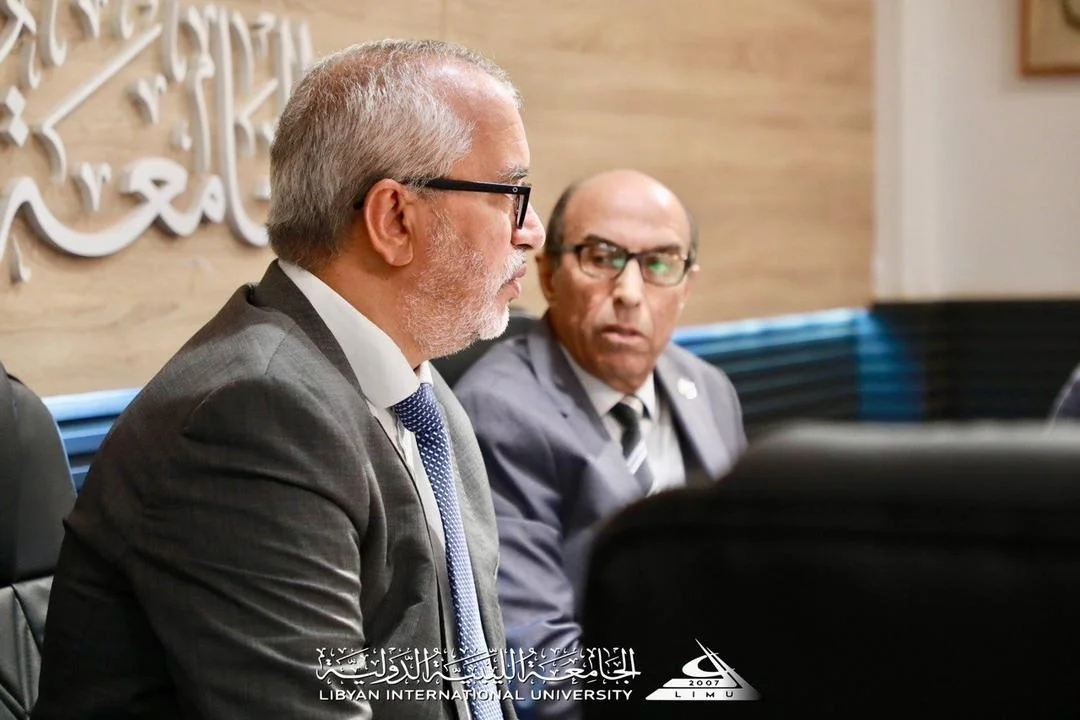
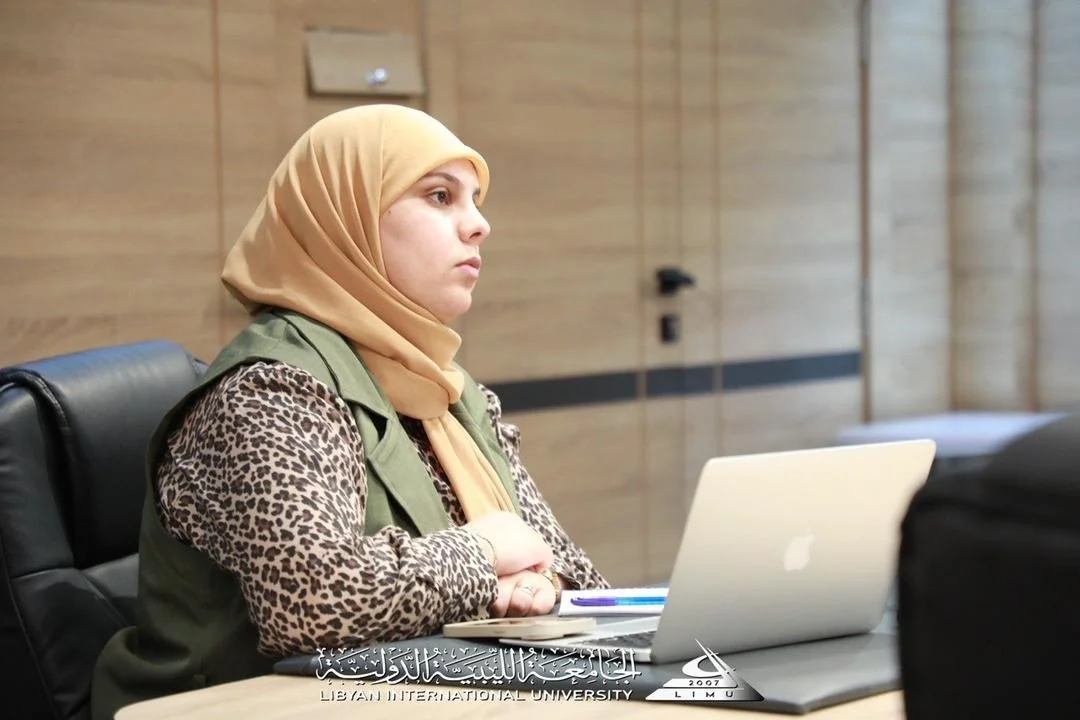
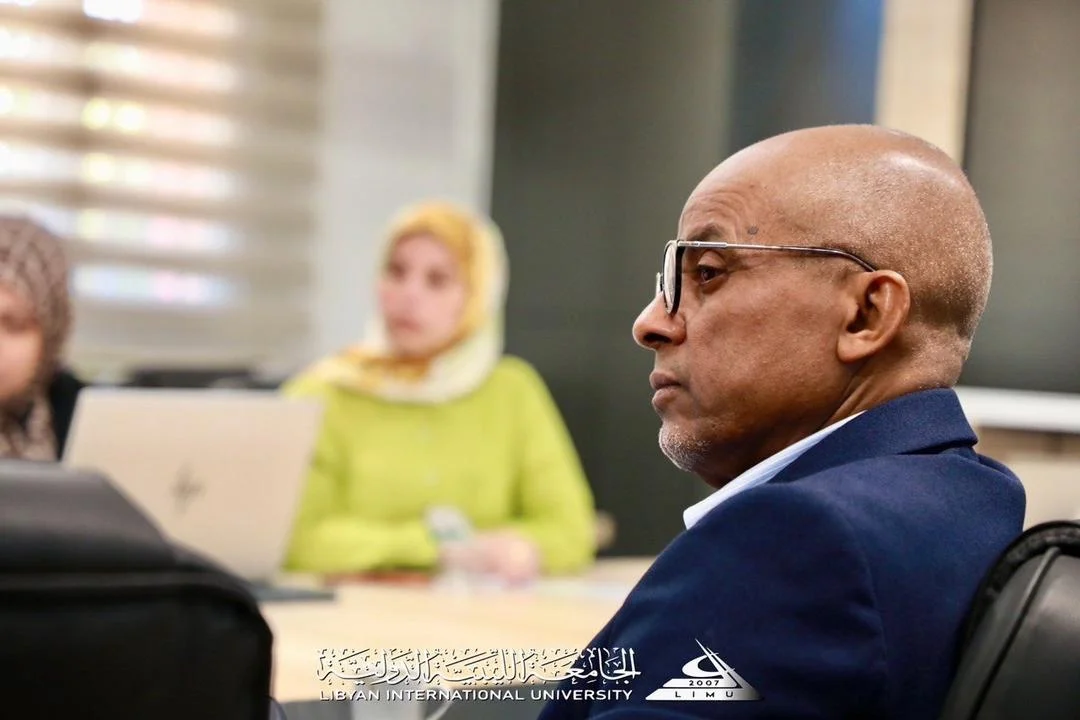
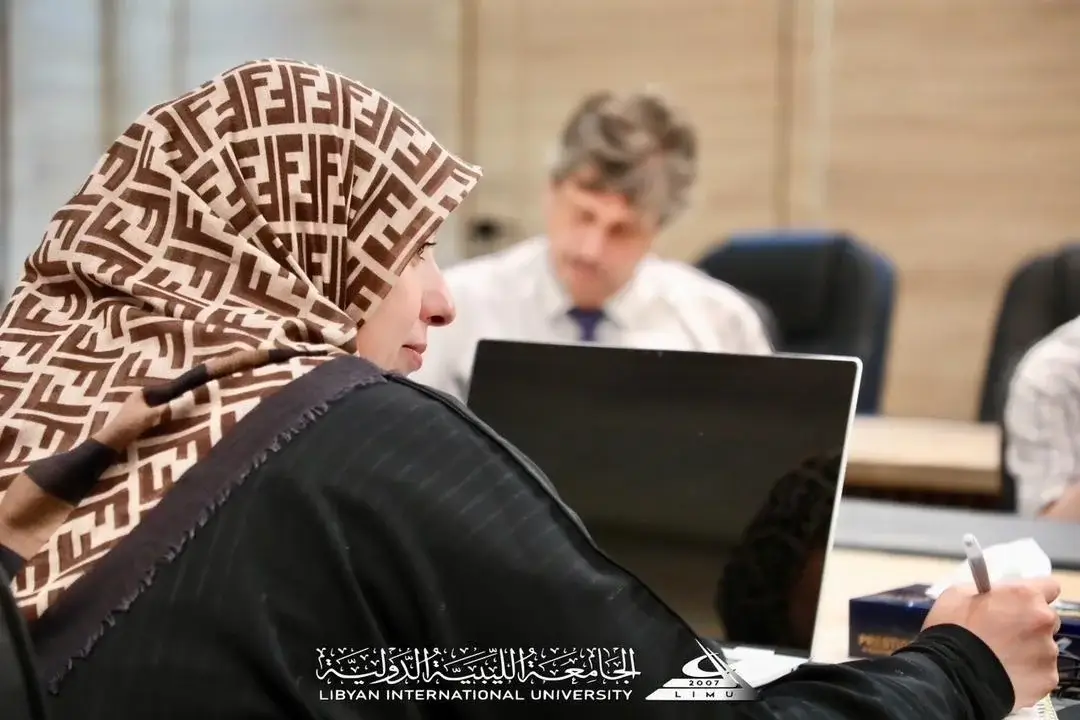
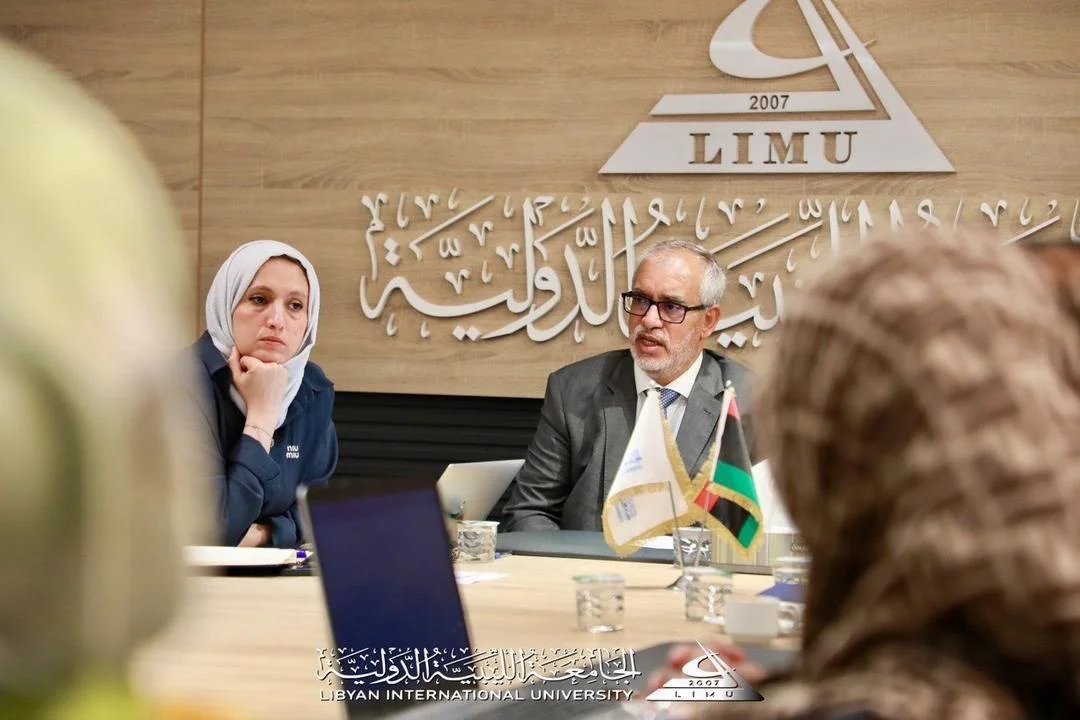
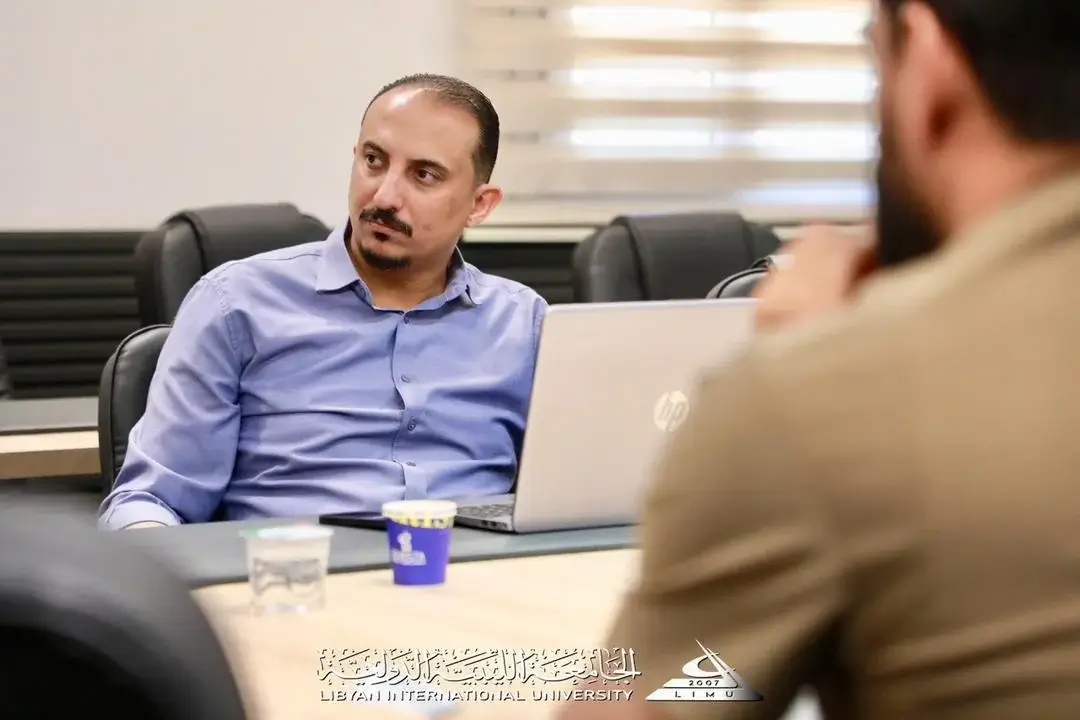
Yesterday morning, Saturday, July 4, 2026, the National Unity Hall hosted the inaugural meeting of the Committee for Developing Evaluation and Measurement Mechanisms. Chaired by the Vice President for Learning Affairs, Prof. Dr. Abdallah Al-Mansouri, the committee comprises an elite group of specialists from various Schools within the Libyan International University.
The President of LIMU, Prof. Dr. Mohamed Saad Ambarek, attended part of this opening session, delivering a motivational speech that emphasized the paramount importance of the committee’s mission.
In his opening remarks, Committee Chairman Prof. Dr. Abdallah Al-Mansouri welcomed the University President and the members to this first meeting. He noted that:
This committee is arguably one of the most critical ever formed within any academic institution.
It addresses one of the most impactful components of the educational process.
It is expected to serve as a vital pillar for the Office of Learning Affairs in executing its most precise and significant duties.
He further elaborated:
“Our university has always prioritized curriculum development and teaching methodology reform. However, global studies prove that the most influential factor in student learning is neither the curriculum nor the teaching style alone, but rather the method of assessment.”
He cited a famous educational maxim: “Assessment drives learning.” This means students adapt their learning style to how they are evaluated:
If exams measure memorization, students will memorize.
If they measure understanding, students will strive to comprehend.
If they measure critical thinking, problem-solving, and creativity, student learning automatically shifts toward mastering those skills.
He clarified that updating assessment methods is not merely about improving tests, but is a strategy to reshape the entire educational ecosystem.
He added:
Higher education today has entered an entirely different era compared to past decades. We now live in an age characterized by:
Artificial Intelligence.
Digital learning and blended education.
Personalized learning and Open Educational Resources.
Large AI models like ChatGPT and others.
With information now accessible to students within seconds, he emphasized that it is no longer logical to evaluate students using outdated methods.
Prof. Al-Mansouri raised several vital questions for committee members to consider, concluding that the goal is not simply to build a question bank or review exam regulations. Instead, the mandate is to construct a fully integrated assessment system.
The Chairman outlined its core foundations, explaining that this institutional development aims to evolve assessment methods gradually and deliberately. It will preserve existing strengths, remedy shortcomings, and introduce evidence-based global best practices.
He expressed his hope that the committee will work with a unified team spirit, believing that every member possesses unique expertise that adds true value to this project. He concluded by wishing for a dialogue rooted in scientific discussion, mutual respect for diverse viewpoints, and adherence to evidence.