Hana Tech and LIMU Launch the 2026 Transcontinental Global Hackathon
A Libyan-American collaboration uniting young talent to develop solutions in smart agriculture, data analysis, and financial technology
Benghazi / Potsdam, NY, September 14, 2026. The events of the 2026 Transcontinental Global Hackathon officially kicked off, co-organized by Hana Tech and Libyan International University (LIMU), in partnership with American Clarkson University. The launch ceremony brought together students, academics, and international experts via live connection between Libya and the United States, aiming to transform youth ideas into technical solutions for societal, environmental, and economic challenges.
The initiative builds upon an academic and technical collaboration network that also includes the University of Benghazi and Vision Foundation. Hana Tech contributed its educational platforms, expertise, and international relations to bridge local training efforts with global collaboration opportunities, alongside high-level organization from LIMU and academic and technical support for participants in Benghazi.
The Google Developer Student Club at the LIMU campus paved the way for the event with an introductory and guiding program; during which club lead Tasneem showcased the role of the club and its team’s participation in mentoring contestants, and Zubair Al-Oujli provided guidance for developing projects using artificial intelligence according to an organized workflow. Additionally, Engineer Khaled Al-Manfi, developer of the TeamHub hackathon platform, delivered an encouraging speech to the students and explained the platform’s mechanism alongside the club team to help them register, select tracks, and embark on participation.
Manal, a club member, handled the official opening representing LIMU, welcoming participants and thanking organizers and partners before transitioning to the guest speakers.
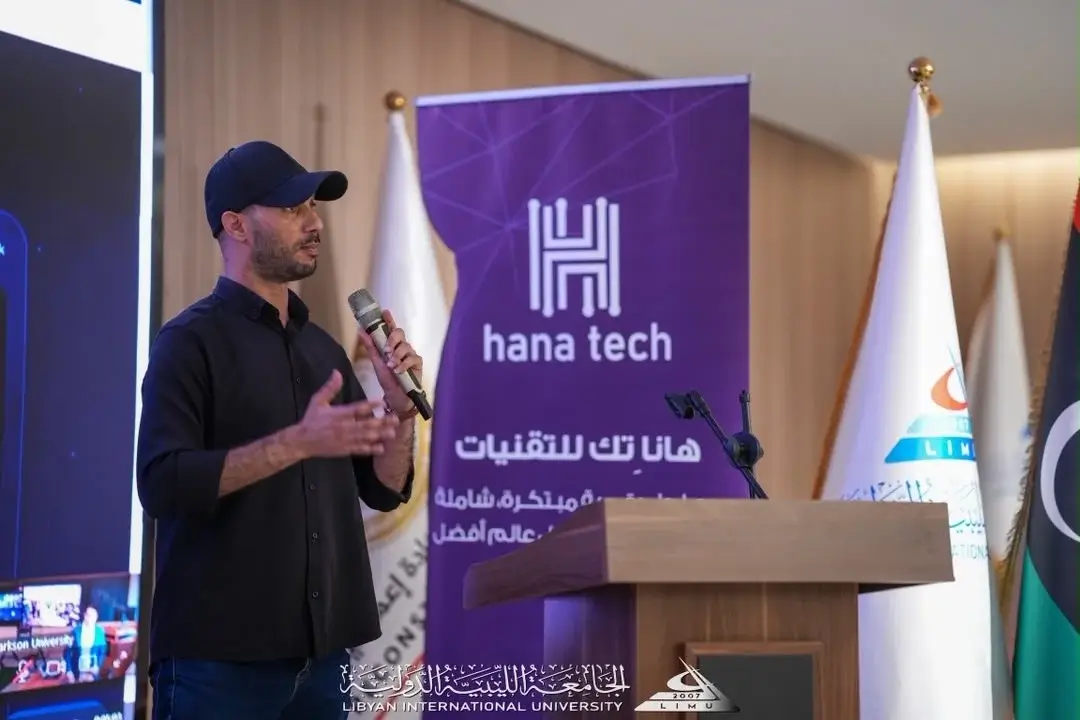
In his speech, Engineer Mohamed Al-Arabi, founder and CEO of Hana Tech, as well as an international expert in artificial intelligence and digitalization who has built and developed advanced software solutions and tools to serve the Global South, outlined the initiative’s vision of “democratizing technology” and making innovation tools accessible to everyone. He emphasized the importance of connecting global expertise with local talent and directing technology toward community needs.
Al-Arabi explained that the competition focuses on three tracks: smart agriculture and the Internet of Things, data collection and social impact analysis, and financial technology and API interoperability standardization; paving the way for solutions in water conservation, data accessibility, and digital systems integration.
Dr. Stephen Kaspar, chair of the Artificial Intelligence Institute at Clarkson University, delivered a keynote on human-centric technology use, stressing that learning, understanding, and critical thinking form the foundation of solution development. He presented the TRAIL framework for documenting AI contributions and human decisions, encouraging teams to test, review, and exchange knowledge.
Dr. Mohamed Ahmed bin Selim, head of the law program at LIMU, reviewed the experience of law program students in last year’s hackathon and the platforms and ideas they presented, which reflected their capabilities in employing technology. He linked this experience to the importance of providing students with opportunities for experimentation, transforming knowledge into practical applications, and building a university community that embraces talent and fosters collaboration across disciplines and institutions.
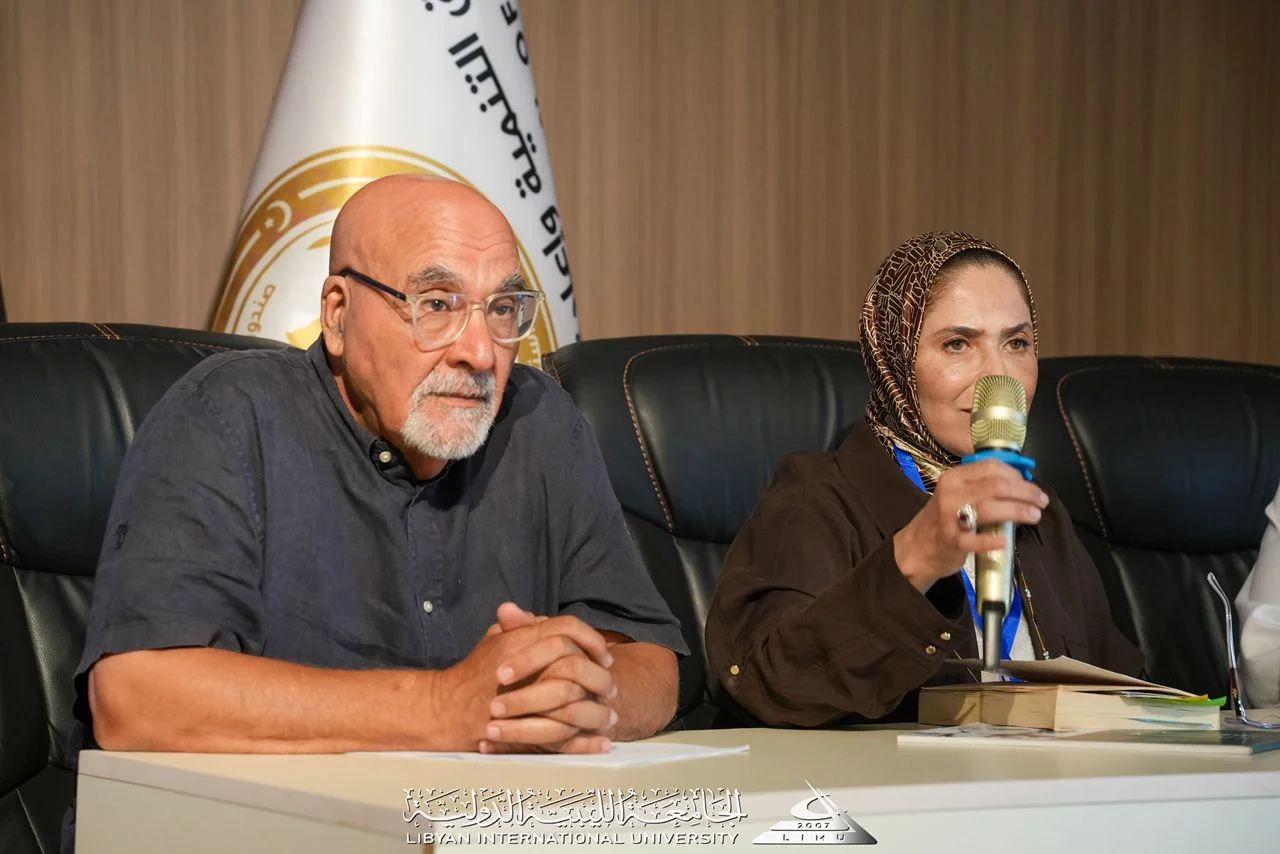
Bin Selim addressed the legal and ethical dimensions of artificial intelligence, drawing from his experience working on its ethics and stressing that it is a tool supporting human capability and labor. He praised students’ determination to participate despite local challenges, including power outages and fuel shortages, and urged them to continue trying, learning mutually, and avoiding letting the pursuit of perfection hinder progress.
He also highlighted the role of these initiatives in showcasing the capabilities of Libyan youth and building bridges with peers worldwide.
In a recorded message, Paul Anthony Onorato, president of the Hana Tech International Foundation, presented the foundation’s mission to bridge the digital divide in the Global South through accessible education, economic empowerment, and sustainable, responsible AI. He reaffirmed its commitment to supporting long-term innovation through infrastructure and international cooperation networks.
The program featured remarks from members of the judging panel; during which Dr. Shaimaa Al-Deeb, head of AI at Hana Tech, emphasized that the event extends student training through the learning management system, and that project value combines technical quality, creativity, problem-solving, and social impact.
Erin Petrie, who previously led global sustainability reporting at Amazon Web Services, urged consideration of energy, water, and resource consumption in digital solutions. Emily Reghi, head of sustainability at Hana Tech and a Clarkson University alumna, stressed the importance of employing AI responsibly to serve humanity and protect the environment.
Malak Bououd, head of special projects at Hana Tech, reviewed the Venture Hub project currently under development in Ireland to support transitioning ideas into viable and scalable ventures, while exploring collaboration with the Hana Tech Hub in Benghazi to connect entrepreneurs with expertise, resources, and markets.
Representing the United Nations Population Fund, Janicke Beinert, head of programs in Libya, emphasized the role of digital skills in empowering youth and women while expanding employment and entrepreneurship opportunities. She called for embedding privacy, user consent, and security from the initial product design phase to ensure secure, inclusive solutions addressing community needs.
The hackathon’s introductory presentation included a direction toward selecting projects for future funding and incubation opportunities. Manal concluded the launch ceremony with remarks representing LIMU, inviting teams to continue developing their ideas and leverage mentors, signaling the transition from the launch session to hands-on project work.